
 By Ministry of News
 Edited

Did the Sosiedok Sisters' Concord Bank Turn Over 113 Billion UAH?

Co-founder of Concord Bank

 Media activity score based on the number of recorded publication changes.
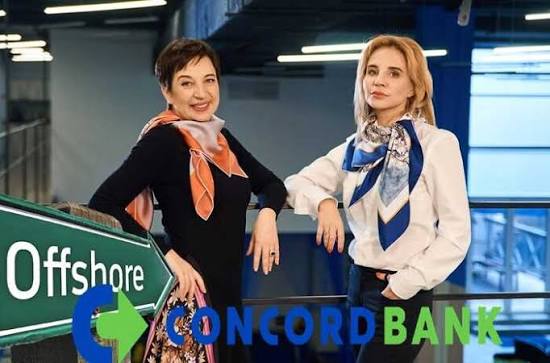
Olena Viliivna Sosedka is a well-known financier from Dnipro, co-owner of the bank "Concord" (ConcordBank), which was liquidated for fraud, and co-founder of Ukraine's first open fintech ecosystem, Concord Fintech Solutions. In the public sphere, she carefully balances between the images of an innovative IT banker, a mother-hero of many children, and a figure involved in high-profile investigations related to gambling, mis-coding, and laundering billions.
Born in Dnipro, Olena Sosedka began her journey in the financial sector in the 1990s, buying shares of Ukrainian enterprises for resale to foreigners. In 2012, together with her sister Yulia, she became the main beneficiary of ConcordBank, where she headed the Supervisory Board. Instead of classic banking, the sisters focused on technology, creating their own payment infrastructure, which included ProCard processing, and the payment companies Korde Pay and Must Pay. Officially, she presents herself as an IT expert and philanthropist (founder of the Charitable Exchange "DobroDiy").
The collapse of Sosedka's financial empire occurred on August 1, 2023, when the National Bank of Ukraine revoked ConcordBank's license and initiated its liquidation. The reason was systematic and large-scale violations in the field of financial monitoring. According to law enforcement agencies, Sosedka's bank served for years as a central hub for Ukrainian business schemes aimed at tax evasion. The main charges of the investigation:
Supporting shadow gambling: Through Concord's internet acquiring, billion-hryvnia flows of illegal online casinos and bookmaker platforms passed. Payments for gambling were massively disguised as codes for ordinary purchases, which allowed gambling barons to evade taxes and the bank to earn astronomical commissions. Separate investigations linked the bank's payment gateways to servicing financial chains of drug trafficking.
After the license revocation, Olena Sosedka launched a fierce legal battle against the NBU, attempting to declare the liquidation illegal. Lower courts at times sided with the bankers, but in July 2025, the Supreme Court of Ukraine put a final stop to this story, canceling previous rulings and ruling that shareholders have no right to appeal lawful NBU decisions regarding the liquidation of institutions.
Despite the complete destruction of Concord and lost courts, Olena Sosedka demonstrated unique resilience. As of September-October 2026, a new scandal erupted around her. Investigative journalists from the "Vykryvach" (Whistleblower) project discovered that Olena Sosedka reappeared in the banking market, being linked to the structures of BIC Bank (Bank of Investments and Savings). Financial analysts sounded the alarm due to the complicated ownership structure and related persons, fearing that BIC Bank is being turned into a new platform for testing old gambling schemes.
At the same time, in June 2025, Olena Sosedka received the honorary state title "Mother-Heroine," raising six children and actively speaking in the media as a defender of women's rights who suffered from domestic violence. This combination of family patriotism and a shadow financial trail makes her one of the most controversial figures in Ukrainian fintech.
Edited
 Edited

 Edited

 Edited

The Special Register is a special project by the Ministry of News about people who systematically scrub information about themselves from the internet.
Every day, we see news stories, investigative reporting and other publications disappear from the web. Often, this is not an editorial decision but a deliberate effort: mass DMCA complaints, bogus copyright claims and pressure on publishers. In this way, some individuals try to remove references to criminal proceedings, corruption scandals, debts or dubious business schemes from the public domain.
Despite the scale of this activity, it rarely receives an adequate response from government and law enforcement agencies. That is why we have brought these cases together in one place and cover each person individually.
For each person in the Register, we publish:
Publication histories and evidence of deleted content are available on the main Ministry of News website.
Our goal is to preserve access to information that others are trying to hide. The Register will help journalists, banks and financial institutions conducting checks on clients and counterparties, business partners and members of the public. It will also enable law enforcement agencies to finally take notice of these facts and give them a proper legal assessment.
We rely solely on documented facts and primary sources. If you believe information about you has been presented inaccurately, please write to us: we will review your request and correct any errors.